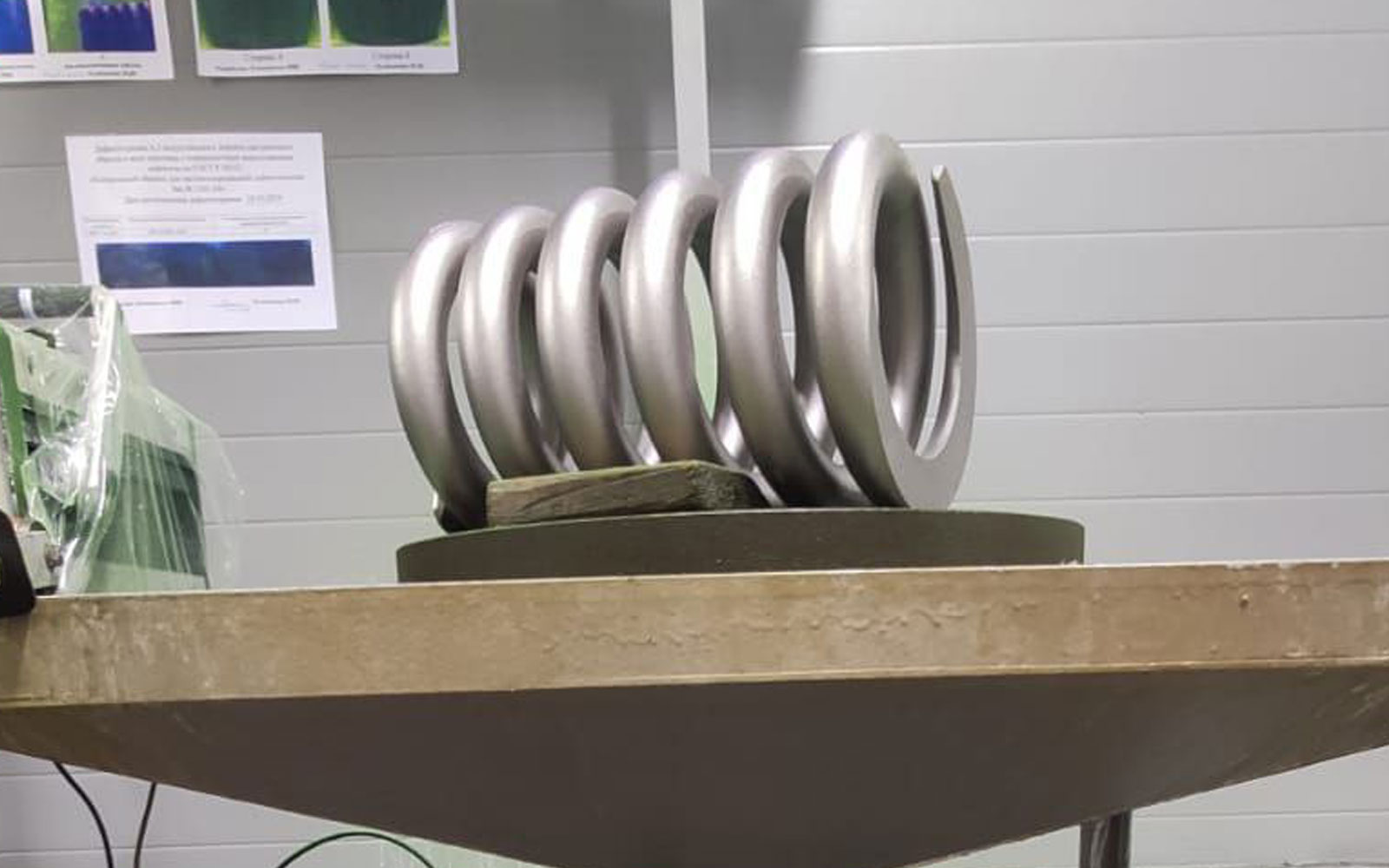
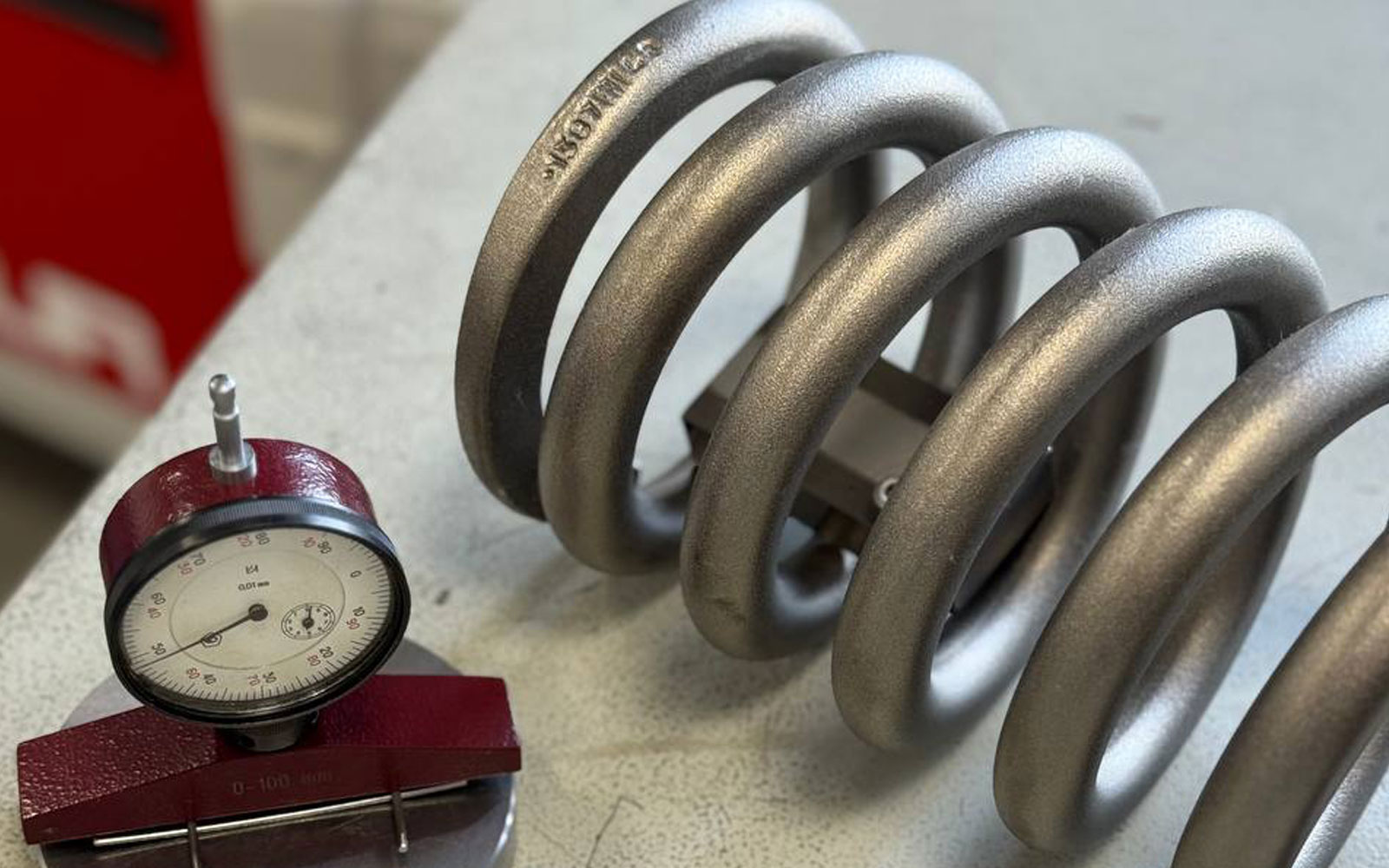
Testing of KAZ SPRINGS
Key controlled characteristics
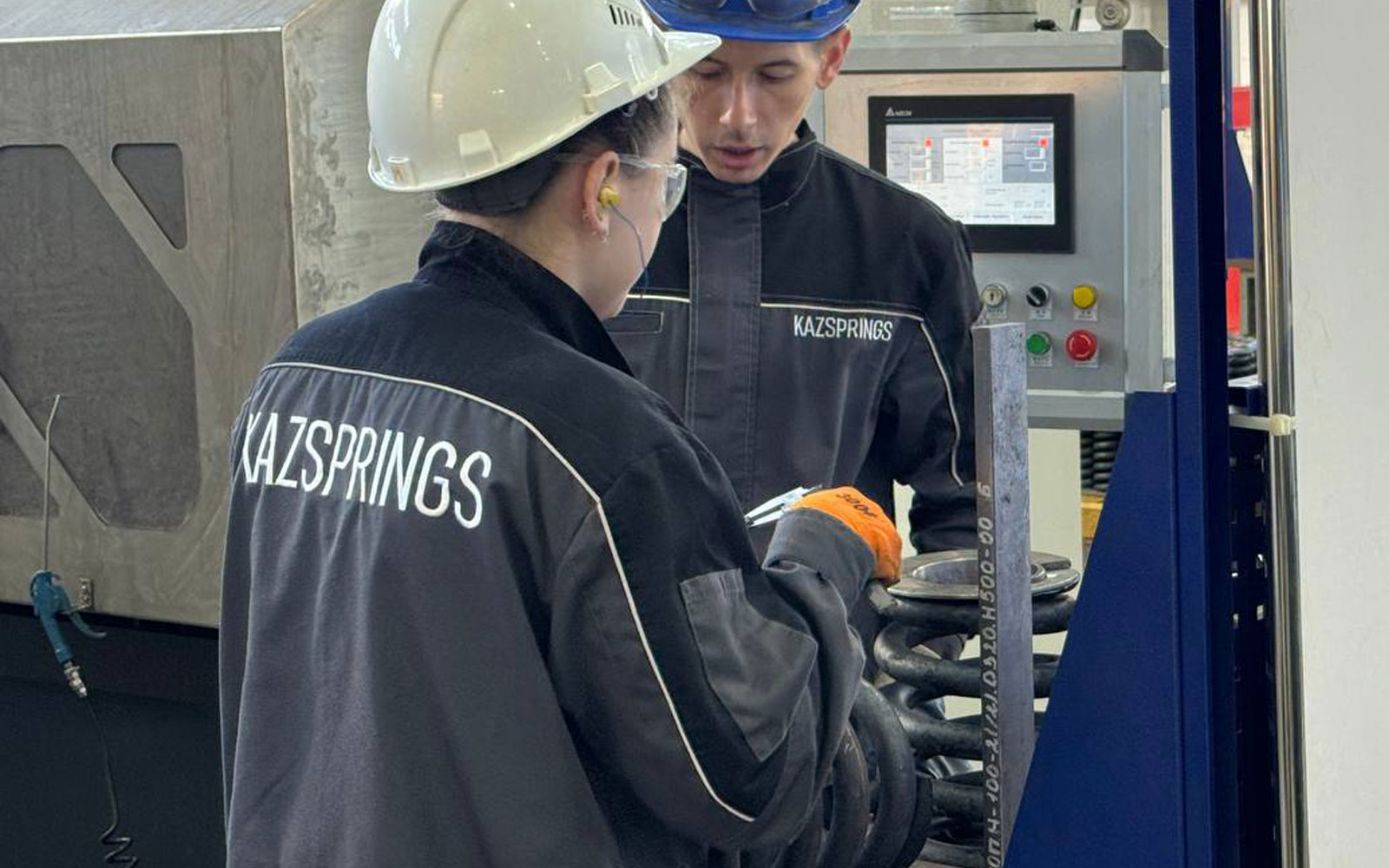
In the production of “KAZ SPRINGS” railway springs, RPC SPRING LLP implements the principles of integrated quality. Spring quality indicators are monitored in in-house laboratory.
Load characteristics of springs
Spring steel hardness, structure
Depth of decarbonized layer
Surface quality, brand readability
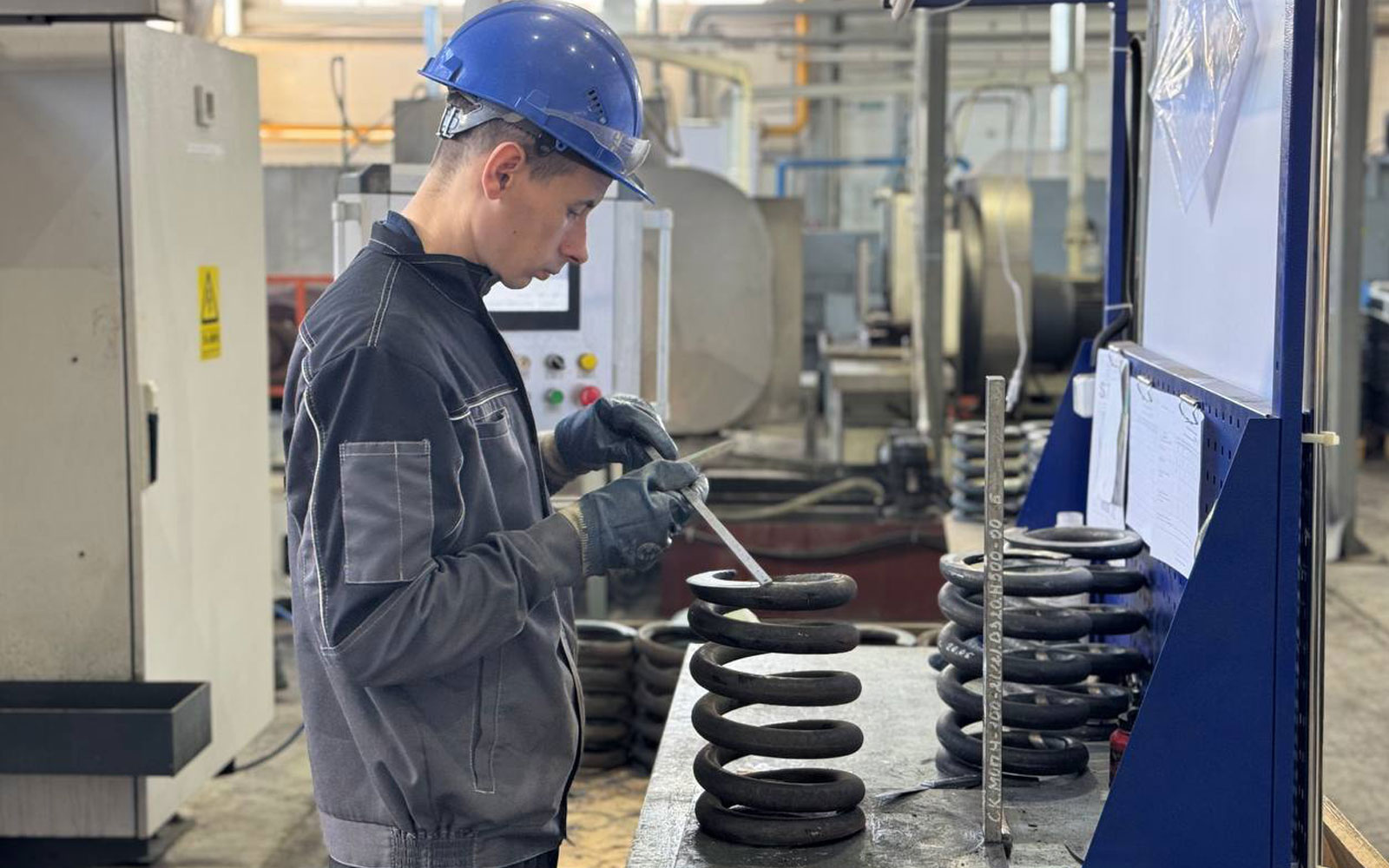
Spring geometry
controlled by parameters:
- Deviation from the perpendicular
- Total number of turns
- Free height
- Controlled diameter
- Tolerance of parallelism of end surfaces
- Height of the reference loop
- Gap between end and working turns
- Sharpening length
Matching the geometric dimensions of the springs affects the performance of the suspension unit of railway car bogies.
Load capacity
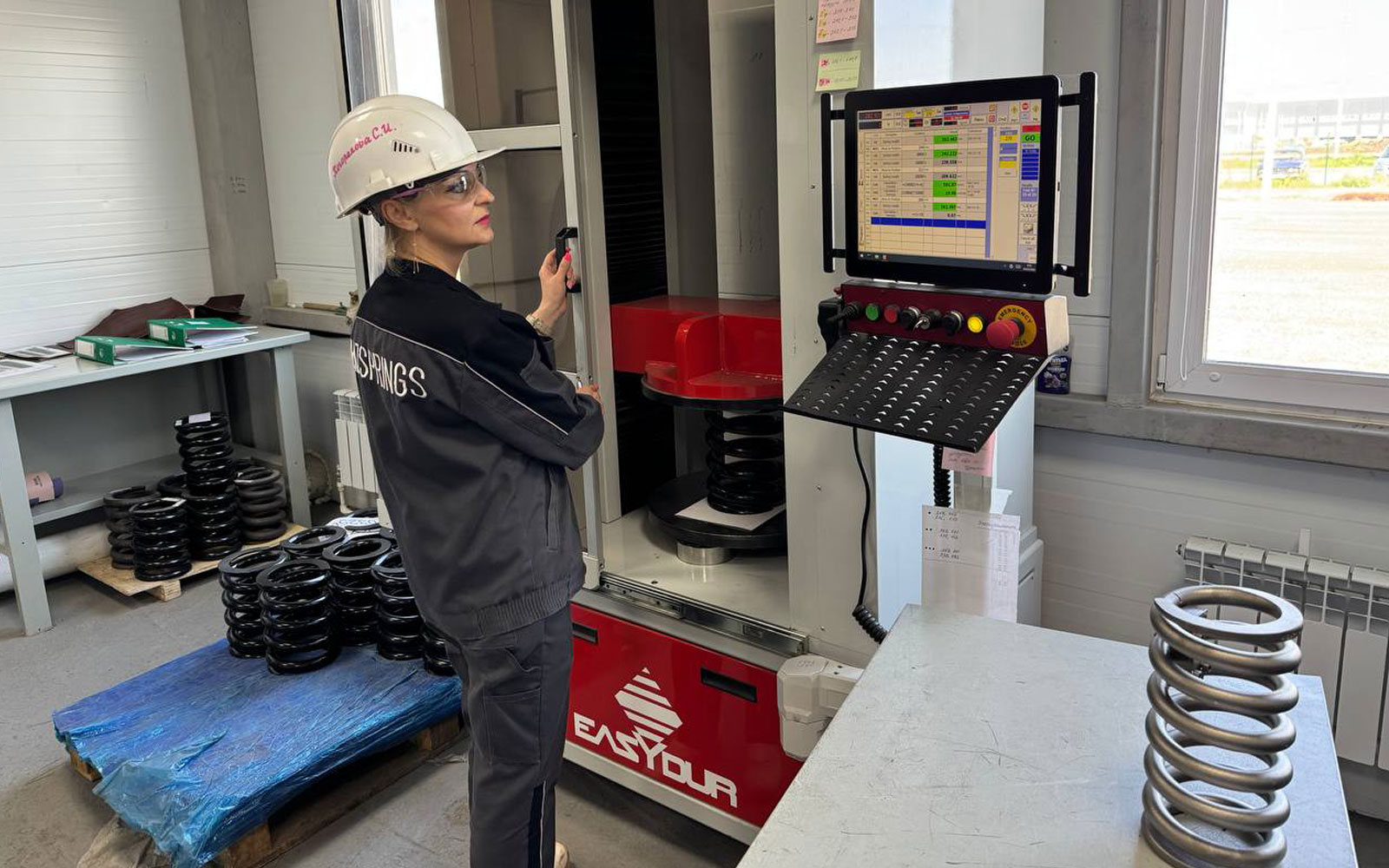
Load characteristics are a key quantitative indicator that describes how the deformation of a railway spring depends on the applied load. During the tests, the forces and compression of the spring are measured, as well as important indicators are recorded:
- Elasticity
- Height under load
- Stiffness
- Deflection under load/side deflection
Cyclic durability
During operation, railway springs are subjected to cyclic stresses, which leads to material fatigue. Endurance or cyclic strength determines the ability of a material to resist variable loads. Failure under cyclic loads is different from failure under static loads. The purpose of cyclic durability tests is to confirm capability of spring to work in long lifecycle without breaks and keep the height and load capacity.
Spring hardness
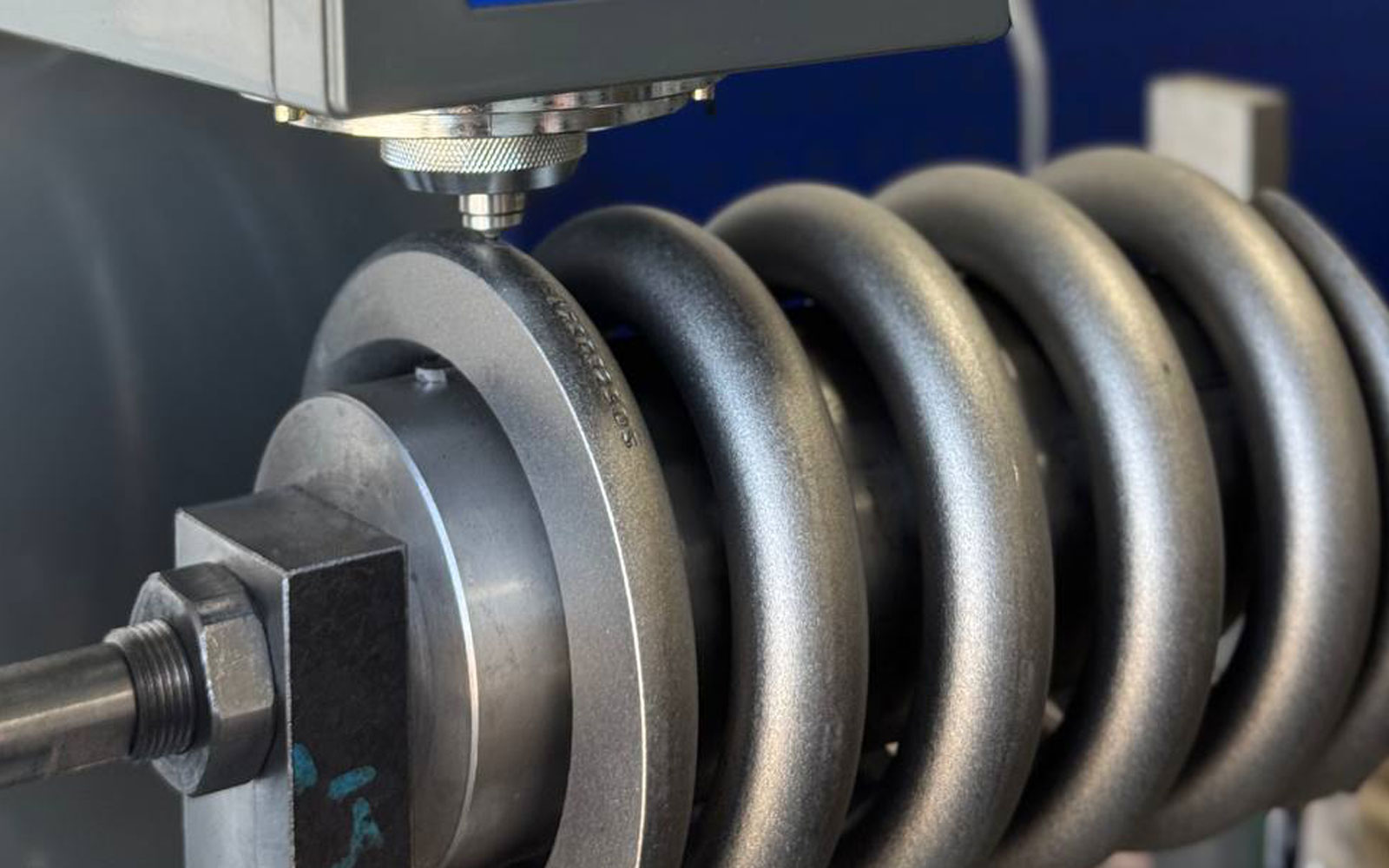
Hardness — the material's resistance to indenter insertion. Modern heat treatment is used in the production of RPC SPRING LLP, which provides stable hardness and an appropriate elastic limit. The control is carried out according to the Brinell TB 5004-03 method on a universal hardness tester in accordance with IS: 1500.
Decarbonized layer
The decarbonized layer is formed due to carbon burnout from the steel surface. It degrades the strength and relaxation resistance, which is critical for the durability of railway springs. The depth of this layer is determined by the metallographic method on cross sections according to the IS:6396 standard. They also monitor the surface roughness according to IS: 3073 and evaluate the quality of the powder-polymer coating, including adhesion and thickness.
Flaw detection
Surface defects reduce the elastic and cyclic properties of springs, so they are checked by visual inspection and magnetic powder method with a fluorescent composture. The flaw detector detects defects on complex surfaces, including internal ones, due to magnetization by pulsed, direct current or permanent magnets using a circular or longitudinal field. Control is carried out according to the UIC 822 standard requirements of IS: 3703.
Brand readability
Railway springs are considered responsible springs and must have a quality mark of compliance with the requirements of the railway industry. All springs coming out of the factory of RPC SPRING LLP are inspected for the readability of the brand, which is one of the criteria confirming compliance with the quality standard of springs.